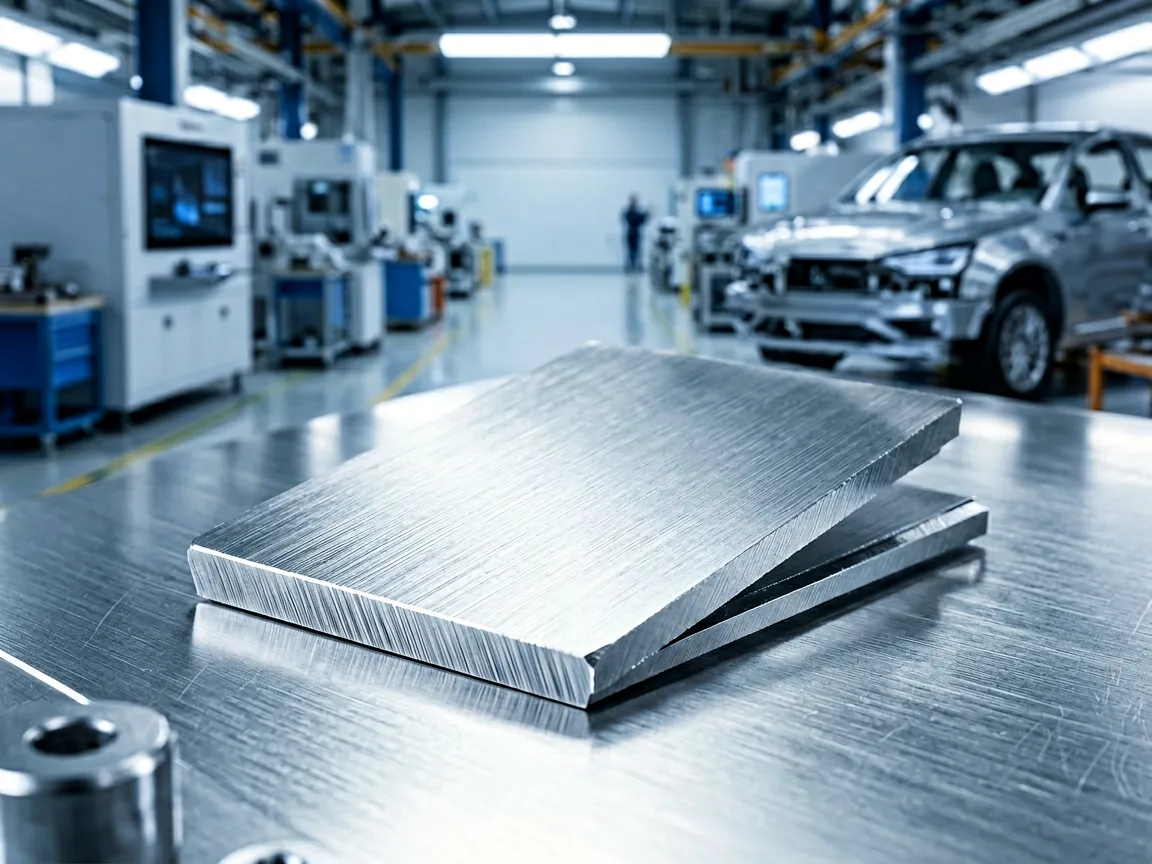
Introduction to 430 Stainless Steel
430 stainless steel is one of the most widely used ferritic grades within the 400-series stainless steel family. As a chromium-based alloy with virtually no nickel content, it offers a compelling balance of corrosion resistance, formability, and affordability — making it an ideal choice for cost-conscious manufacturers. Often referred to as "17/0 stainless steel" due to its composition of approximately 17% chromium and 0% nickel, Grade 430 delivers many of the benefits of premium austenitic grades like 304 at a significantly lower price point.
The ferritic body-centered cubic (BCC) crystal structure of 430 distinguishes it from the face-centered cubic (FCC) structure of austenitic grades. This fundamental difference gives 430 its strong magnetic properties, limited heat-treatable hardening capability, and excellent resistance to stress corrosion cracking — characteristics that make it suitable for a broad range of industrial applications.
Chemical Composition and Mechanical Properties
The chemical composition of 430 stainless steel (UNS S43000 / EN 1.4016) centers on its chromium content, which provides the hallmark corrosion resistance of stainless steel:
In its annealed condition, 430 stainless steel exhibits a tensile strength of at least 450 MPa (65,000 psi), a yield strength of no less than 205 MPa (30,000 psi), and elongation of at least 22%. Its hardness typically measures around 89 HRB on the Rockwell B scale, with a density of 7.70 g/cm³ and a melting range between 1425°C and 1510°C. While its strength is moderate compared to some alloys, 430 can be cold-worked to increase both strength and hardness, offering flexibility in material processing.
Key Features and Performance Advantages
One of the most distinguishing features of 430 stainless steel is its strong magnetism. Unlike austenitic grades such as 304, which are generally non-magnetic in the annealed state, 430 is fully magnetic under all conditions — whether annealed, cold worked, or welded. This property proves valuable for magnetic separation processes, electromagnetic applications, quality inspection through simple magnet tests, and certain sensor and switch designs.
Despite being a ferritic grade, 430 offers surprisingly good formability. It performs well in roll forming, bending, spinning, stamping, and embossing operations. While it does not match the deep-drawing capability of 304, it serves as an excellent substitute for many less demanding forming applications, providing comparable performance at a reduced cost.
Another notable advantage is 430's oxidation resistance at elevated temperatures. It maintains good scaling resistance up to approximately 815°C (1500°F) in continuous service and 870°C (1600°F) in intermittent service, making it a practical choice for exhaust systems, heating elements, and other high-temperature components.
Comparing 430 and 304 Stainless Steel
Understanding the differences between 430 and 304 stainless steel is essential for material selection:
| Property | 430 Stainless Steel | 304 Stainless Steel |
|---|---|---|
| Corrosion Resistance | Good | Excellent |
| Magnetic Properties | Fully magnetic | Non-magnetic (annealed) |
| Tensile Strength | ≥ 450 MPa | ≥ 515 MPa |
| Ductility / Formability | Good | Excellent |
| Weldability | Fair | Excellent |
| Density | 7.70 g/cm³ | 8.00 g/cm³ |
| Cost | Lower (40-50% less) | Higher |
When budget is a primary concern and the operating environment is relatively mild, 430 represents an outstanding value. However, when maximum corrosion resistance, deep drawing, or non-magnetic properties are required — particularly in chloride-rich or coastal environments — 304 remains the preferred choice.
Common Industrial Applications
430 stainless steel finds extensive use across numerous industries, driven by its combination of aesthetics, performance, and cost efficiency:
**Home Appliances:** Refrigerator exteriors and panels, dishwasher interiors, oven and range surfaces, microwave components, washing machine drums, and small appliance housings.
**Automotive Industry:** Exhaust system components, trim molding, wheel covers, and decorative exterior accents where moderate corrosion resistance and attractive appearance are priorities.
**Architectural & Decorative:** Interior trim, elevator panels, kitchen backsplashes, and decorative fixtures where the brushed No.4 finish provides an appealing satin appearance.
**Kitchenware & Food Processing:** Utensils, sink components, and food handling equipment where hygiene and ease of cleaning are paramount.
Available Surface Finishes
430 stainless steel is offered in a variety of surface finishes to meet diverse aesthetic and functional requirements:
The No.4 brushed finish, in particular, has become synonymous with modern appliance design, offering both visual appeal and practicality in high-traffic environments.
Fabrication Guidelines
**Welding:** While 430 can be welded, its weldability is considered fair rather than excellent. The heat-affected zone may experience grain growth, leading to reduced ductility and corrosion resistance. Best practices include using low heat input with high travel speed, performing post-weld annealing at 790-815°C to restore properties, and selecting 430 or 309L filler metals. For critically welded components, 304 may be a more suitable alternative.
**Forming:** 430 performs well in bending, roll forming, and moderate drawing operations. Deep drawing may require warm forming or intermediate annealing passes due to the lower room-temperature ductility inherent in its BCC structure.
**Machining:** Machinability is fair to good, similar to carbon steel with slightly higher tool wear. Free-machining variants such as 430F are available for operations demanding improved chip control and faster cutting speeds.
**Heat Treatment:** 430 cannot be hardened through heat treatment — hardening is achieved exclusively through cold working. Annealing at 790-815°C followed by air cooling softens the material and restores ductility after cold-working operations.
Frequently Asked Questions
**Is 430 stainless steel good quality?** Yes. 430 is a high-quality ferritic stainless steel that delivers genuine stainless performance — good corrosion resistance, excellent formability, and an attractive appearance — at a fraction of the cost of austenitic grades. It is the most popular ferritic grade precisely because it offers exceptional value for money in mild to moderate service environments.
**Will 430 stainless steel rust?** Under certain conditions, yes — particularly in chloride-rich environments, highly acidic conditions, or coastal areas with salt exposure. However, 430 provides substantially better rust resistance than carbon steel and delivers long-lasting, corrosion-free performance for indoor use, kitchen appliances, and mild outdoor exposure.
**Is 430 stainless steel magnetic?** Absolutely. 430 is fully magnetic in all conditions — annealed, cold worked, and welded — owing to its ferritic BCC crystal structure. This distinguishes it clearly from non-magnetic annealed 304 and makes a simple magnet test an effective identification tool.
**Can 430 stainless steel be welded?** Yes, but with important considerations. Its weldability is rated as fair, and the weld zone can suffer from grain growth that reduces both ductility and corrosion resistance. By employing low heat input, post-weld annealing, and appropriate filler metals, successful welds can be achieved. For applications where weld integrity and corrosion resistance are paramount, 304 is generally recommended.
Choosing the right stainless steel grade is a decision that affects product performance, manufacturing efficiency, and total cost. 430 stainless steel occupies a unique position in the materials landscape — delivering reliable stainless steel performance where the extreme requirements of 300-series grades are unnecessary. For engineers and procurement specialists seeking a cost-effective solution without compromising on essential properties, 430 remains a proven and dependable choice across countless industrial applications.