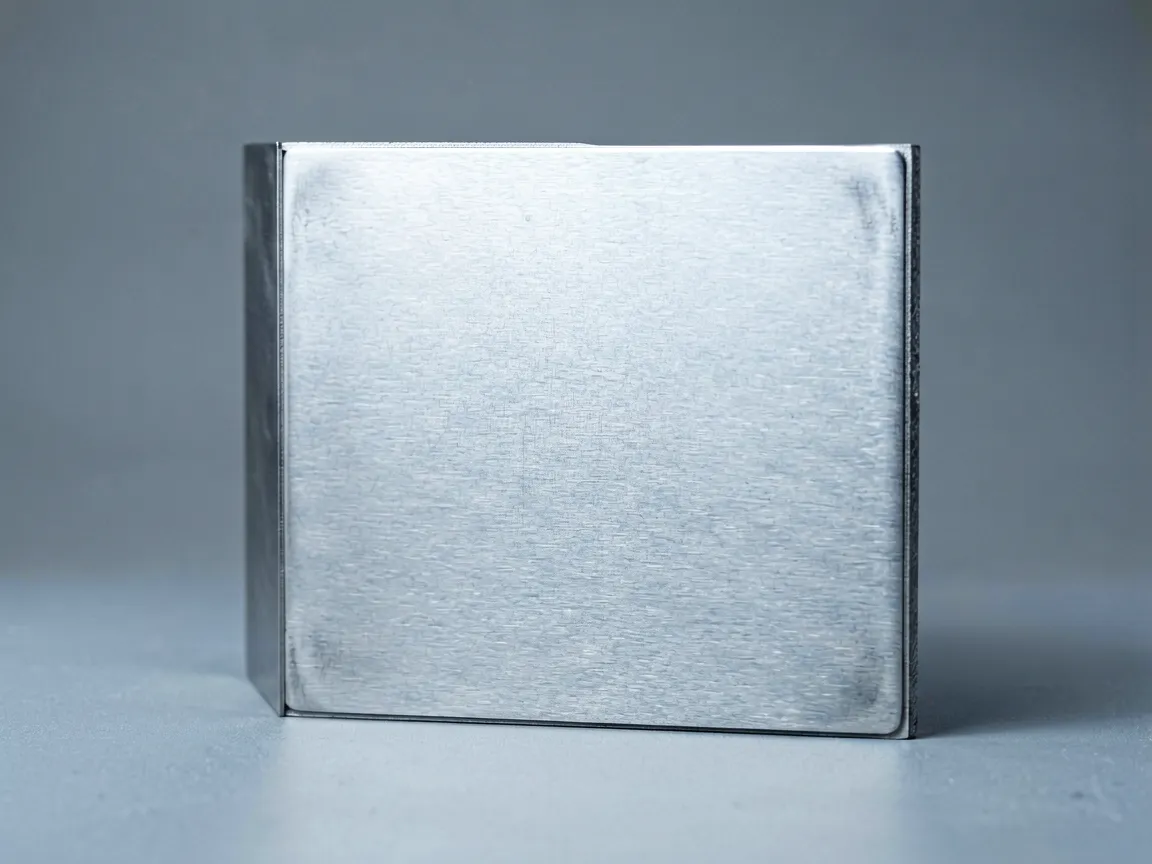
Introduction to 201 Stainless Steel
201 stainless steel is a cost-effective austenitic grade that belongs to the 200-series, where manganese and nitrogen partially replace nickel to maintain the austenitic structure. With approximately 3.5–5.5% nickel compared to 8–10.5% in 304, and 5.5–7.5% manganese, this grade offers an economical solution for applications where extreme corrosion resistance is not required. It is often used as a substitute for 304 in decorative, architectural, and light industrial applications.
Chemical Composition of 201 Stainless Steel
The chemical makeup of UNS S20100 / EN 1.4372 defines its performance characteristics:
Chromium (Cr): 16.0–18.0%Nickel (Ni): 3.5–5.5%Manganese (Mn): 5.5–7.5%Carbon (C): ≤0.15%Silicon (Si): ≤1.00%Nitrogen (N): ≤0.25%Iron (Fe): BalanceThe lower nickel and higher manganese content directly reduce material costs while still delivering reliable mechanical strength and moderate corrosion resistance.
Why Manganese Matters in 201
Manganese acts as an austenite stabilizer, partially substituting for nickel. This substitution delivers several key advantages:
Cost reduction — Manganese is significantly cheaper than nickel, making 201 approximately 20–30% more affordable than 304Increased strength — Higher tensile and yield strength due to manganese and nitrogen alloyingFaster work hardening — Beneficial in applications requiring enhanced surface hardnessCorrosion trade-off — Slightly less effective than nickel in chloride-rich or highly corrosive environmentsMechanical Properties
201 stainless steel delivers strong mechanical performance, often exceeding that of 304 in strength metrics:
Tensile Strength: ≥520 MPa (75,000 psi)Yield Strength: ≥275 MPa (40,000 psi)Elongation: ≥40% (in 2")Hardness: 95 HRBElastic Modulus: 193 GPaDensity: 7.93 g/cm³Melting Range: 1400–1450°CCompared to 304, 201 provides approximately 35% higher yield strength, allowing designers to use thinner sections while maintaining structural integrity.
Key Features at a Glance
Good Corrosion Resistance — Performs well in indoor, dry, and mild atmospheric conditions, though not suitable for marine or highly corrosive settingsHigh Strength — Superior yield and tensile strength compared to 304Good Formability — Can be deep drawn, rolled, bent, stamped, and roll-formed, though requiring more force than 304Magnetic Properties — Slightly magnetic in the annealed condition; cold working increases magnetism furtherGood Weldability — Compatible with TIG, MIG, and spot welding using 308L or 200-series filler metals201 vs. 304: Key Differences
Understanding when to choose 201 over 304 is essential for cost-efficient material selection:
Nickel Content: 201 contains 3.5–5.5% Ni vs. 8.0–10.5% in 304Corrosion Resistance: 304 excels in broad environments; 201 is suitable for mild conditions onlyYield Strength: 201 is stronger (≥275 MPa vs. ≥205 MPa)Formability: 304 is more ductile and easier to formCost: 201 is 20–30% more economicalMagnetic Behavior: 201 is slightly magnetic; 304 is non-magnetic when annealedChoose 201 when cost savings and higher strength are priorities in low-corrosion applications. Choose 304 for outdoor exposure, acidic environments, or where maximum formability and weld corrosion resistance are critical.
Common Applications
201 stainless steel is widely adopted across industries where moderate performance and cost efficiency matter:
Architecture and interior decoration — Handrails, trim, and facade elementsKitchen equipment and food processing — Utensils, sinks, and non-acid food contact surfacesAutomotive trim and exhaust componentsFurniture and fixtures — Decorative tubes, panels, and fittingsHousehold appliances — Washing machine drums, refrigerator linersConstruction profiles and roll-formed sectionsAvailable Surface Finishes
201 is available in most standard finishes, making it highly versatile for decorative uses:
2B — Bright cold-rolled mill finish, the most economical optionNo.4 — Directional brushed or satin finish for architectural appeal8K — Mirror polish for high-reflectivity applicationsHL — Fine hairline texture for modern decorative designsBA — Bright annealed finish with high reflectivityEmbossed and patterned options for bespoke decorative projectsFabrication Considerations
Forming — Requires more force than 304 due to higher yield strength and faster work-hardening; intermediate annealing may be needed for deep-draw operationsWelding — Use GTAW (TIG), GMAW (MIG), or resistance welding with 308L filler; post-weld annealing improves corrosion resistance in the weld zoneMachining — Adjust parameters for higher work-hardening rates; use sharp tools with slower speeds and heavier feedsPolishing — Takes an excellent polish and is widely used for decorative mirror-finish tubing and sheetsFrequently Asked Questions
**Is 201 stainless steel good quality?**
Yes, 201 is a quality grade for its intended applications. While it does not match the corrosion resistance of 304 or 316, it provides excellent value in mild environments and far outperforms carbon or galvanized steel.
**Will 201 stainless steel rust?**
It can rust in saltwater, highly acidic, or chloride-rich environments. For indoor and dry outdoor use, 201 typically provides many years of rust-free service. In coastal or chemical environments, 304 or 316 are recommended instead.
**Is 201 food safe?**
It is generally considered food-safe for dry or low-acid foods. However, 304 is preferred in commercial food processing due to its superior corrosion resistance against acidic products.
**How can you distinguish 201 from 304?**
Magnet test — 201 is slightly magnetic; annealed 304 is non-magneticChemical test kits — Reagent color changes indicate nickel content differencesSpectrometer analysis — The most accurate identification methodPrice — 201 is typically 20–30% cheaper than 304**Can 201 stainless steel be welded?**
Yes, using TIG, MIG, spot, and laser welding methods. Type 308L filler is commonly used. Post-weld annealing can help restore corrosion resistance in the heat-affected zone.